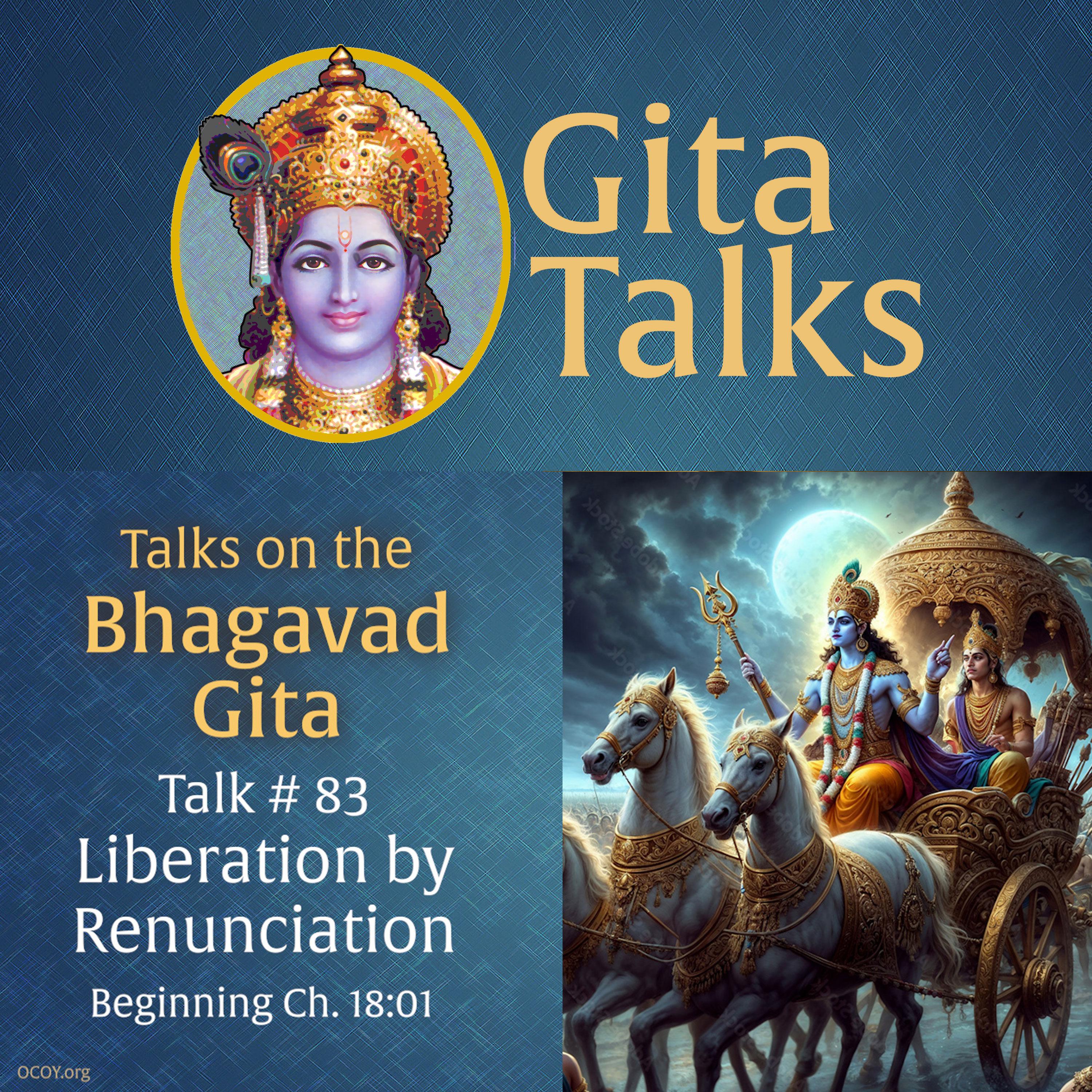
Episode Summary
The eighty-third in a series of talks by Swami Nirmalananda Giri (Abbot George Burke) on the Bhagavad Gita, India's most famous scripture: the unforgettable dialog between Sri Krishna and Arjuna about the essence of spiritual life.In this talk, beginning with Chapter 18:01, Swamiji discusses what is meant by renunciation, and the difference between Sannyasa and Tyaga.Main Topics: • Arjuna asks Krishna to explain the subtle distinction between sannyasa (renunciation) and tyaga (relinquishment). • Sannyasa: Giving up actions motivated by desire. • Tyaga: Renouncing attachment to the fruits of action—even obligatory action is performed, but without desire for results. • Renunciation does not mean inaction; rather, it’s a conscious withdrawal of ego, attachment, and obsession with outcomes. • Some duties—like sacrifice, charity, and austerity—must never be renounced, as they purify the heart when done without attachment. • Krishna warns against tamasic renunciation, such as abandoning responsibilities out of delusion or escapism (e.g., abandoning family duties under the guise of spiritual life). • True renunciation must be sattwic: wise, intelligent, detached, self-controlled, and dharmic. • Even unpleasant tasks are accepted calmly; even enjoyable ones are not clung to. • Real renunciation lies in performing one’s duties skillfully and selflessly, without self-seeking or avoidance.Key Takeaway:Real liberation comes not from dropping out, but from dropping the ego.