Value for Value ⚡️
Episode Summary
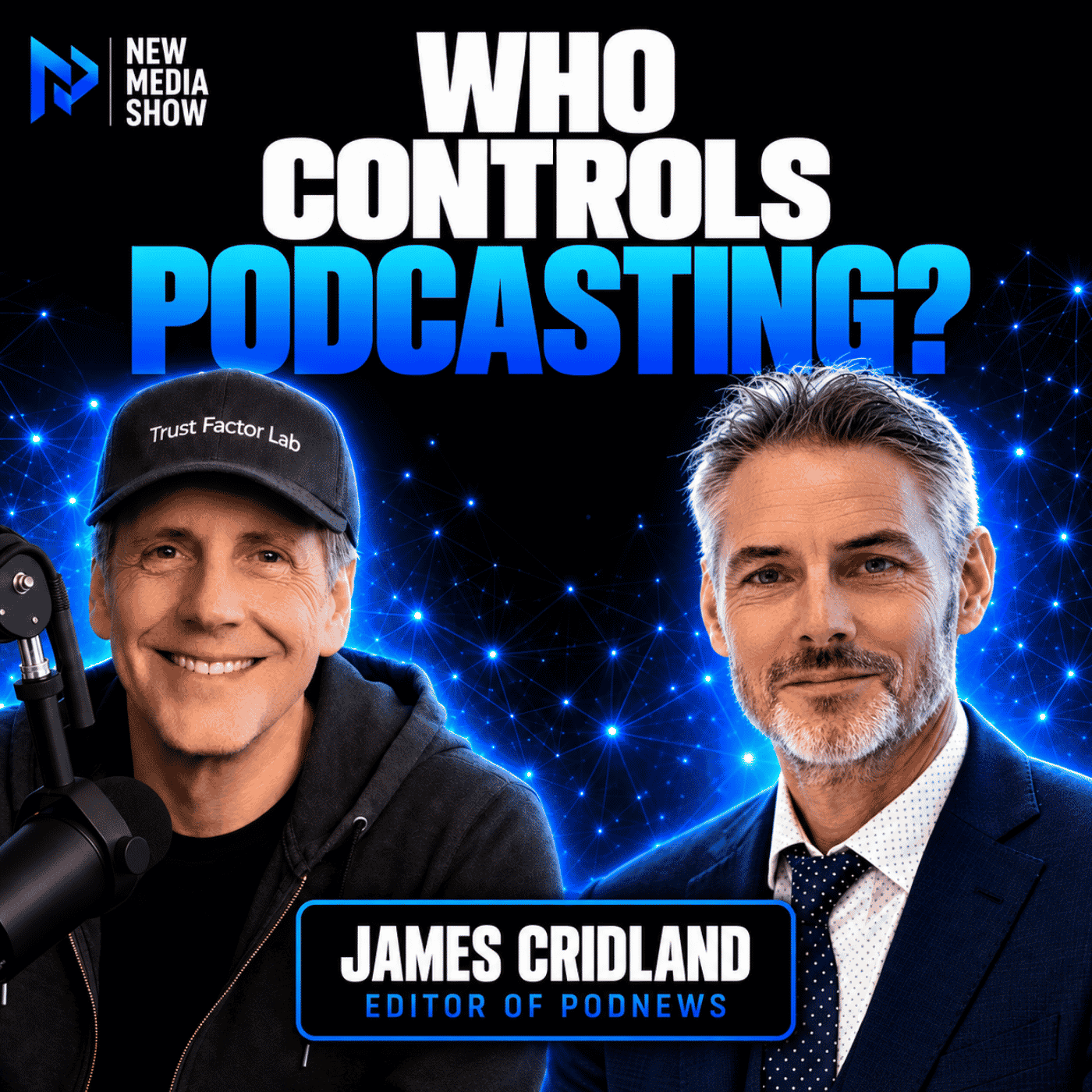
Your podcast can be available everywhere and still be hard to find. So who controls its future: the creator, the audience, or the platform? In New Media Show #688, Rob Greenlee welcomes back James Cridland, Editor of Podnews, co-host of the Podnews Weekly Review, and a 2026 Podcast Hall of Fame inductee, for a conversation about what Podcast Week in New York City revealed about our industry. We compare notes on the IAB Podcast Upfronts, CreatorFronts, and a very different NYC Podcast Movement. James also shares his experience at the Sounds Profitable Business Summit. The week had plenty of energy, but it also exposed real differences in how creators, platforms, and advertisers see podcasting’s future. Podcast Movement’s Terminal 5 venue brought challenges around meetings, exhibitor space, and crowding. James argues that the headphone-based sessions worked better than expected. We also reflect on Tom Webster’s tribute to Todd Cochrane and why the industry still needs people willing to speak up when something is wrong. Podcasting has expanded its distribution. That doesn’t mean it controls where people discover shows. Sounds Profitable: Tom Webster’s presentation leads us into YouTube, Spotify, and Netflix, where podcasts compete with much more than other podcasts. James Cridland also cautions against confusing whether someone has ever used a platform with where they regularly listen. A major part of our conversation is measuring media consumption. James challenges the IAB’s approach to audio and video, while making another important point: tearing down the download without a workable replacement can undermine the business we already have. James offers a proposal worth discussing: share advertising revenue with podcast apps that provide useful consumption data. James argues that apps need a financial reason to invest in discovery and better listening experiences. I raise the concern about taking revenue from creators, and we explore whether growing listening could make that trade worthwhile. Rob and James also discuss open RSS, HLS video, and Podcasting 2.0 as ways to expand access. That includes discovery built around places and local interests, along with AI production tools that help humans make better content. Adding video should not make the audio listener a second-class audience. The conversation still needs to work when someone cannot see the screen. The question is how we keep podcasting open to a wide range of voices while competing in a much bigger media world. More reach matters. So do audience trust, creator choice, and a business that can sustain the work.