Value for Value ⚡️
Episode Summary
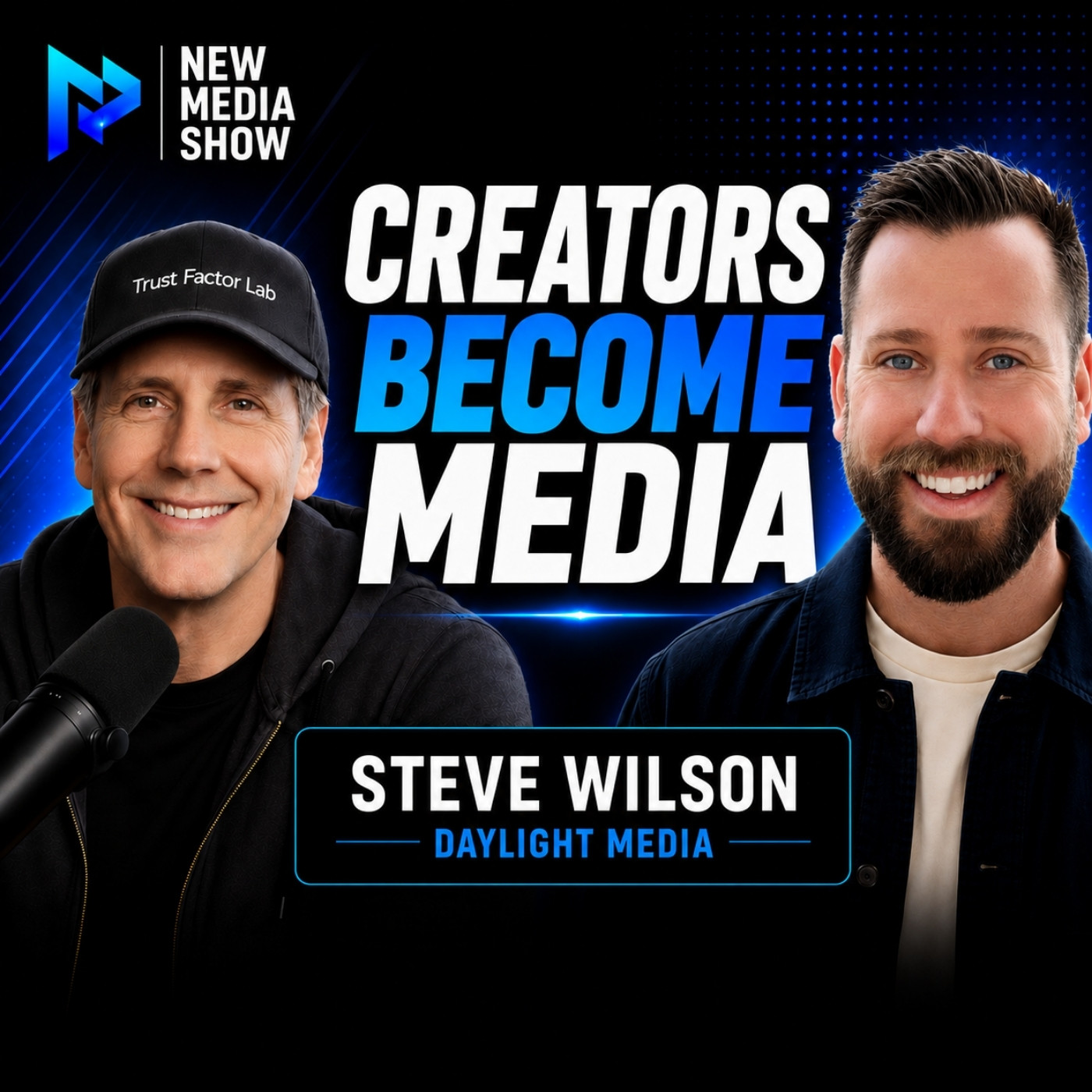
In Episode #676 of the New Media Show, host and Podcast Hall of Famer Rob Greenlee welcomes Steve Wilson, Chief Strategy Officer at Daylight Media and QCODE, for a wide-ranging conversation about the shift from producing a successful podcast to building a sustainable creator-led media company. Creators no longer operate in a simple world of publishing one show to ONE place and relying mainly on advertising. The strongest creators are building direct relationships with audiences across podcasts, video, short-form clips, newsletters, communities, subscriptions, live events, products, and services. Podcasting remains one of the most effective long-form formats for building trust and repeated audience connection. It is now one part of a larger media strategy shaped by video distribution, platform algorithms, artificial intelligence, audience ownership, and the growing power of individual personalities. Steve brings a valuable perspective to this discussion. Before joining QCODE, he spent years working with Apple Podcasts and iTunes. At QCODE, he helped develop and distribute premium scripted audio series featuring talent including Matthew McConaughey, Demi Moore, and Rami Malek. QCODE has since expanded through Daylight Media, which provides distribution, monetization, technology, marketing, and business support for a broader network of creators. Daylight currently works with roughly 70 creators and shows representing approximately 300 million monthly audio downloads and video views. Across that network, video now accounts for a significant share of consumption, although the balance between audio and video differs considerably from show to show. That difference is important. Some creators have audiences that strongly favor YouTube and Spotify video. Other shows continue to perform primarily through audio. For some programs, video may be valuable mainly as a discovery and social marketing layer rather than as the central product. Steve argues that creators should evaluate their format, audience, resources, and business goals before committing to a major video expansion. Rob and Steve discuss Apple’s HLS video support and why it may become an important addition to the podcast distribution ecosystem. HLS can give creators greater flexibility in delivering video while maintaining many of the ownership and control principles associated with RSS. The larger issue is whether creators retain access to their audience data, revenue information, advertising options, and the ability to move their shows between services. The conversation also examines what makes a show work in both audio and video. A strong