Episode Summary
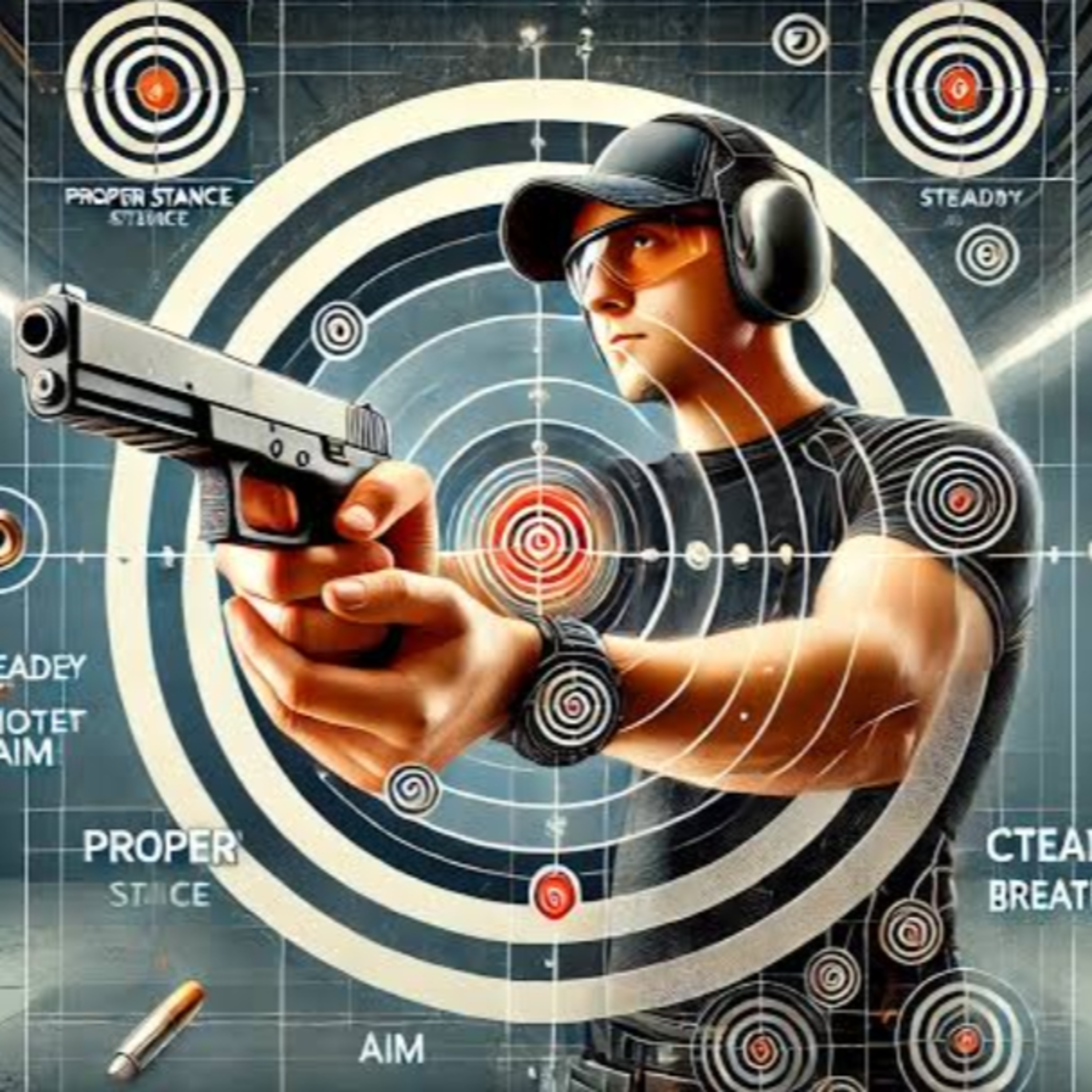
Shooting and acquisition of targets are the skills that integrate both mental and physical focus. To become good at them, one needs not only the mechanics of aiming but also the human perception. Any minute advancement multiplies into more fluid, quicker, and steadier outcomes with time progression.The process of becoming precise is technical and instinctive. It is concerning your equipment, knowing your environment, and balancing mind and body. Even experts who have been shooting for a long time never get tired of training these skills since their perfection is unceasing practice. This guide shall disaggregate, strategies that can finally take your performance to a different level.Understanding the Foundations of Visual AlignmentYou must have your eyes tell your hands with perfect precision before you pull the trigger. A correct shot is rooted in proper visual confirmation. It begins with the concentration on the target and being aware of what is happening around you. To stabilize your eyes, but do not fix your eyes, and learn to follow near and far objects at the same time.Surprisingly, peripheral vision is important in the rapid acquisition of targets. When you understand the movement within your surroundings, you can predict motion, and then you have a fraction of a second advantage. Use this awareness and conscious breathing, and you form a psychological rhythm that will diminish anxiety and enhance concentration.Your visual control is heightened through an equipped homelessness. As soon as you are aware of how exactly your eyes behave, even when there is stress, you have a natural ability to get your eyes to fall into place quicker. Gadgets such as a red dot sight ease the process by casting a plain aiming point, eliminating the mental effort of centering the traditional iron sights. Operating it intuitively combines the attention that enables you to respond promptly without thinking about how to fit in.Breathing and Timing to Optimize PrecisionPrecision shooting is not merely physical, but it is also physiological. Deep breathing is used to regulate the heart rate and stabilize the movements. Breathing in and out at slow rates lessens tremors and keeps the mind focused.Shooting on the natural pause between breaths, commonly referred to as the respiratory pause, is an ancient technique of enhancing accuracy. The slightest changes in timing can be converted to closer congregations and quicker hits.Breathing control should be combined with mental visualization. You visualize the target, the direction that your shot is going to take, and the impact. This is a form of preparation by the mind that you are about to execute something, and that makes the entire process natural and instinctive.Mental Focus and Maintaining ConsistencyHaving good accuracy is physical as much as a mental exercise. The mind must be trained to be calm in the face of pressure, not distracted easily, and to have habits. Mental control is enhanced by meditation, visualization, as well as focus drills.Finding smaller milestones in the practice sessions, such as improvement of reaction time by a tenth of a second or narrowing groupings, generates quantifiable improvement. Such a framework maintains the mind busy and concentrated on constant improvement.ConclusionCombining visual accuracy, physical control, mastery of equipment, and mental concentration is what leads to faster target acquisition and greater accuracy. All these elements lead to the other one, creating a comprehensive strategy that turns raw ability into regular performance.There is no rush to improve; you must go step by step to learn your own body, learn to be coordinated, learn to be skilled in the equipment, and learn to be skilled