From manufacturing zones to service economies
Episode Summary
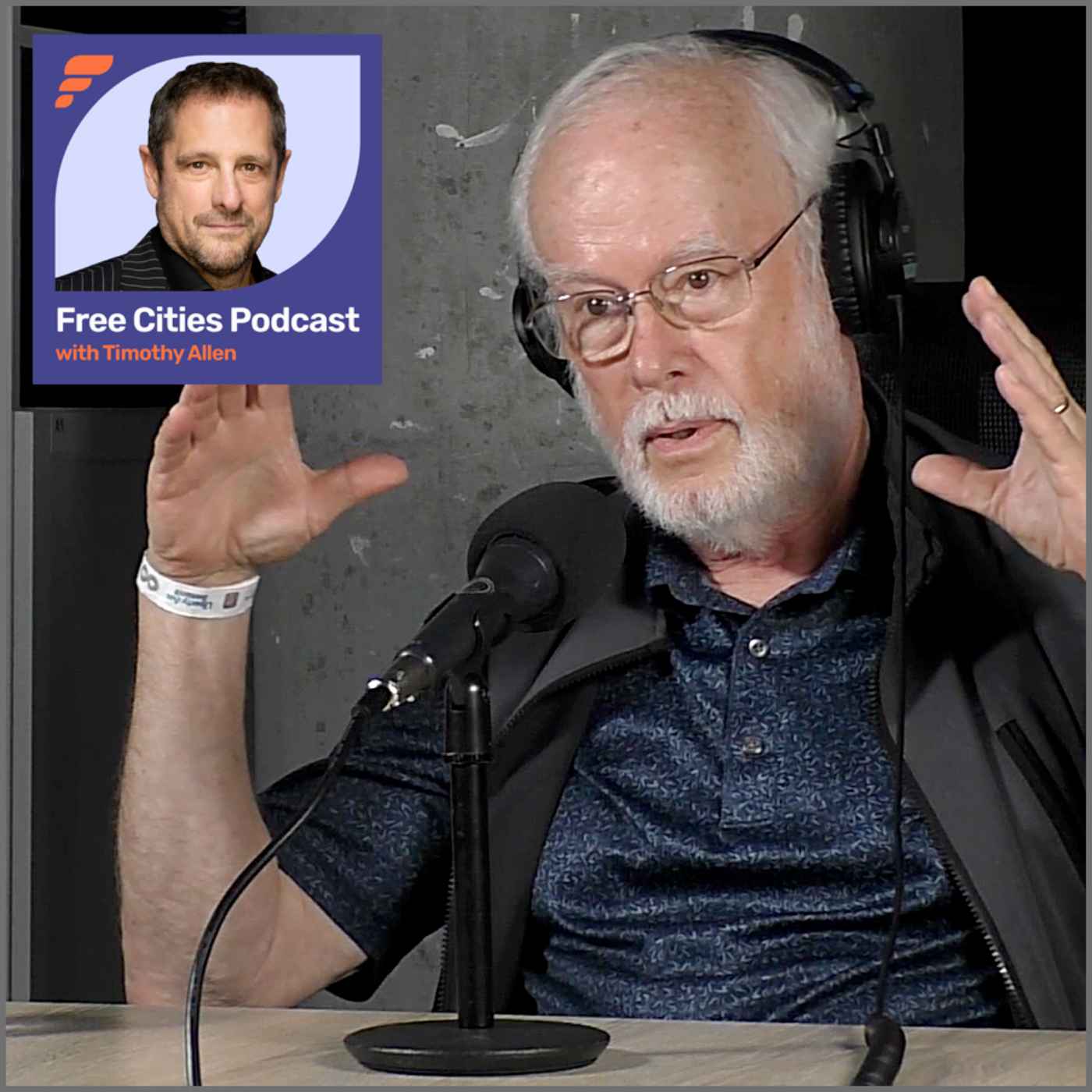
He knew the men who tried to start their own countries. He watched every one of them fail. - Mark Frazier has been in this movement longer than almost anyone alive. He put out libertarian magazines in high school, and by eighteen he had been made publisher of Reason, back when it ran out of a truck driver's apartment and had three hundred subscribers. That was 1970. Over the following half century he worked on free zones in more than fifty countries, advised the Reagan administration on enterprise zones, consulted for the World Bank and USAID, and wrote the step-by-step guide on how to build these places. He is president of the nonprofit Openworld and chairs the advisory board of the Startup Societies Foundation. Timothy Allen sits down with Mark in Próspera for a genuine oral history of the Free Cities idea, told by someone who was there for its strangest chapters. Mark knew the men who tried to start their own countries in the sixties and seventies: Werner Stiefel and his Atlantis project, Mike Oliver and the flags raised on seamounts off Tonga and Vanuatu. He was a reporter on the ground in 1975 when one of those breakaway nations collapsed, and the epiphany he had on the way home became his life's work. What sets Mark apart is the lessons he drew from watching so much fail. Do not fall in love with a location and push, he says. Make it a prize that countries compete to win, the way he once got twelve nations bidding to host the first spaceport on Earth. And do not build an enclave that grows rich while the neighbours grow resentful. Design it from day one so the people already living there share in the upside. From there the conversation ranges a very long way: Shenzhen and Montego Bay, the birth of offshore call centres, thirty-dollar micro-vouchers that put Sri Lankan villagers into university, and why Mark thinks AI is about to pull the rug out from under the entire free zone model. And in the final stretch it turns genuinely strange, in the best way: abundance, spirituality, whether a silicon chip can want something, and a rat experiment called Universe 25 that neither host nor guest could quite let go of. In this conversation: A left-wing teenager who read Rand and changed course Becoming publisher of Reason at eighteen The lost history of libertarian new-country projects Werner Stiefel's Atlantis and Mike Oliver's island nations Watching a breakaway nation collapse in 1975 The spaceport prize that drew twelve competing countries Why funnelling money into one chosen location is the wrong way to start Shenzhen in 1982, sprouting skyscrapers from a fishing village Montego Bay and the birth of offshore call centres Uruguay, Zonamerica and the single paragraph that changed everything Anti-fragile zones and designing for shared upside Build-operate-transfer and why leasing land beats selling it Thirty-dollar micro-vouchers and the Sri Lankan school that reached university Why AI is about to pull the rug out from under the free zone model The future of zones as places of experience, safety and serendipity AI tutoring, the Alpha School, and a daughter learning from an AI horseman Hiring on proof of work rather than diplomas Land value as the mechanism that keeps a community on side The Phoenicians, gifts on a beach, and building trust from nothing What Mark thinks Próspera got right and what it missed Abundance, the unnecessariat, and why elite capture may not come Spirituality as the last uniquely human premium Universe 25 and the danger of a world without limits A prediction for the next twenty years Timestamps (audio version, includes Timothy's episode introduction): 0:00:00 - Welcome and introduction 0:03:15 - Veritas Villages 0:07:2