Value for Value ⚡️
Sammanfattning
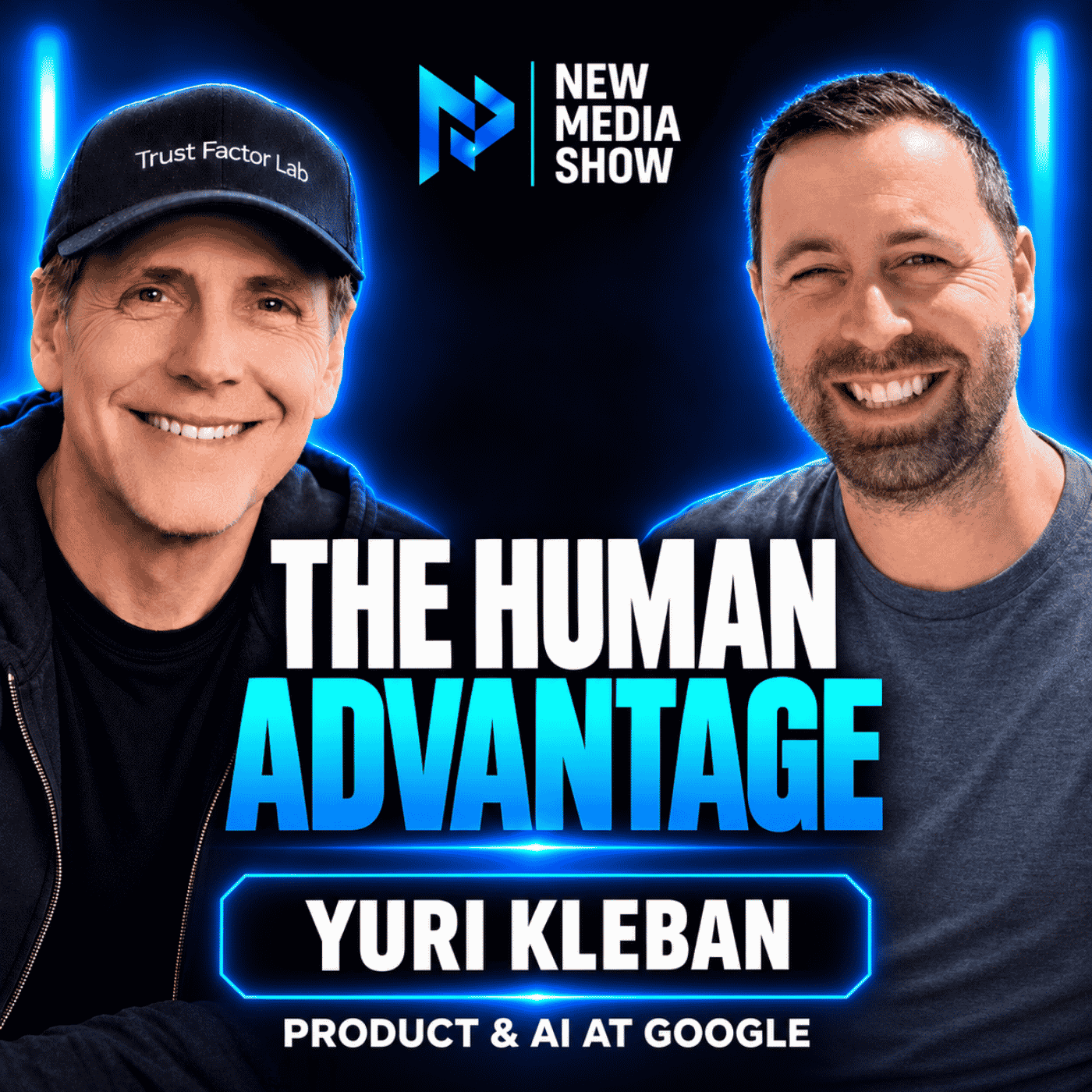
When AI can make anything look polished, what earns an audience’s trust? Watch episode 694 on YouTube Can creators still build trust when AI can generate convincing voices, polished videos, personalized messages, and entire digital personalities? The harder question is what makes someone worth following when production quality becomes easier to reproduce. In New Media Show #694, Rob Greenlee talks with Yuri Kleban, introduced as a Global Product Lead Manager in Partnerships at Google, about the human contribution to AI-assisted media. They explore originality, disclosure, storytelling, creative judgment, and the relationship between creators and audiences. The conversation moves from Yuri’s experiment with a disclosed workplace bot to AI-assisted games, fan-created entertainment, and the practical limits of automation. Both speakers see creative opportunities, while examining permission, impersonation, workload, and the risk of handing over too much judgment. Their predictions and examples reflect the discussion, not announcements of Google or YouTube products or policies. The central question: if AI can handle more of the production, what should the human creator remain responsible for? Three practical takeaways Make the audience’s problem your starting point. Rob and Yuri return to usefulness, a distinctive point of view, and storytelling. Choose an idea that helps a specific audience before deciding which AI tools or production techniques to use. Keep a person accountable for the result. Review AI-assisted work for accuracy, meaning, permission, and disclosure. Yuri describes a process of generating possibilities, choosing what works, and refining it. The first output is a starting point for judgment. Measure the whole workload. Faster production can lead to more projects and more supervision. When testing an AI workflow, count reviewing and correcting time as well as generation time, and set a limit on how much new work you take on. Why polish is becoming a weaker signal Yuri recalls the effort he once put into making his own video work look polished. He argues that when tools make professional-looking production widely available, polish alone becomes less useful as evidence of a creator’s effort or originality. That shifts attention toward the idea, the story, and the perspective behind the work. Rob connects this to human intuition: the choices a creator makes about what matters to other people. AI may help execute an idea, but the discussion keeps returning to the human who decides what is worth making and why. For podcasters and video creators, the practical implication is to explain something clearly, bring experience to the conversation, and make editorial choices an audience can recognize. Better tools can support that work; production quality by itself does not establish credibility. The disclosed bot that did not sound like Yuri One