Value for Value ⚡️
Sammanfattning
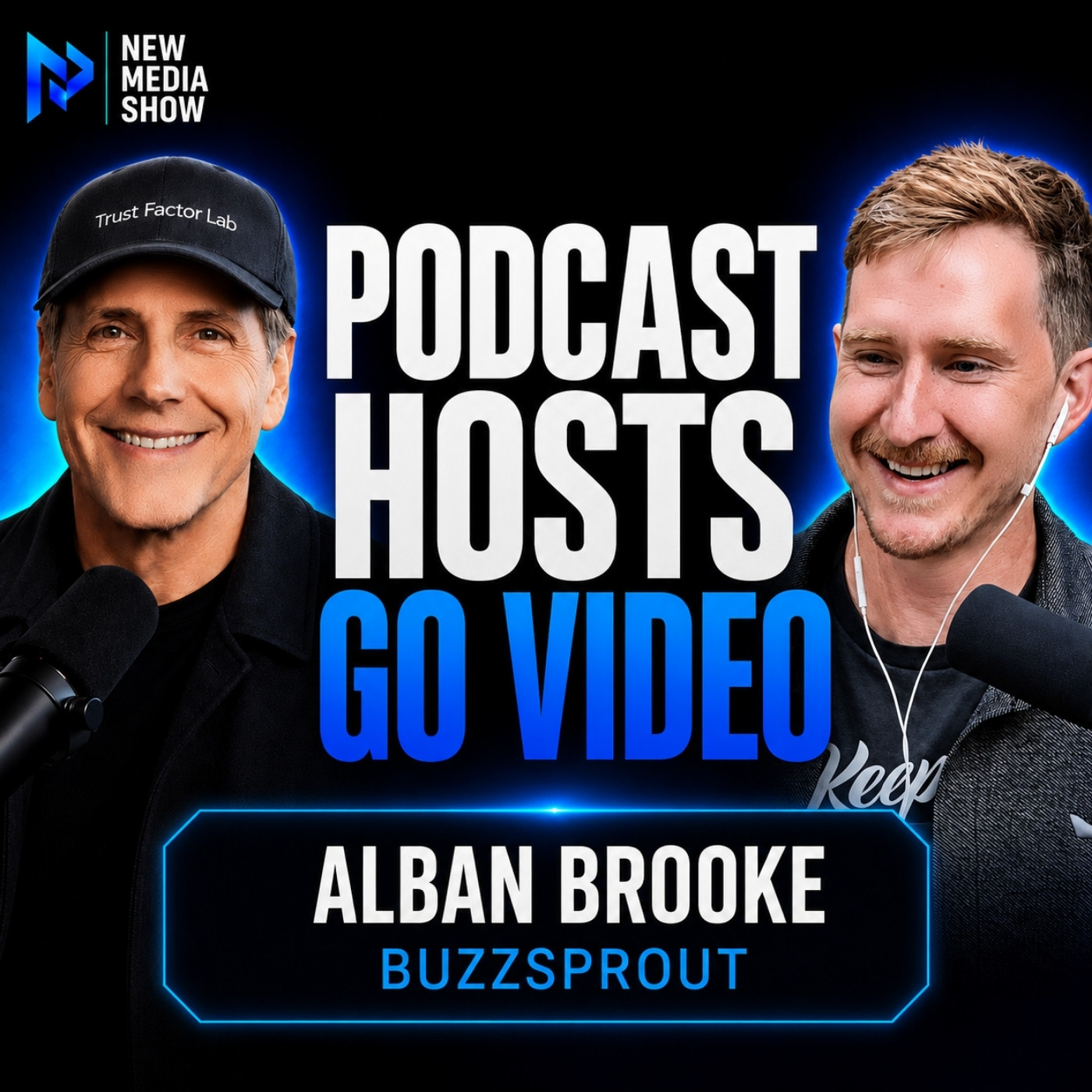
In Episode 681 of the New Media Show, host Podcast Hall of Famer Rob Greenlee welcomes Alban Brooke, Head of Marketing at Buzzsprout, for a deep conversation about one of the biggest structural changes in podcasting: the evolution of podcast hosting from audio-file distribution to a broader audio-and-video creator infrastructure. For most of podcasting’s history, the hosting model was relatively straightforward. A creator uploaded an audio file, the host generated an RSS feed, and that feed distributed the episode to listening apps worldwide. That podcast hosting model is changing. Video is once again becoming a significant part of podcasting, and podcast hosting platforms are being asked to do much more than store an MP3 and maintain an RSS feed. They increasingly need to manage video encoding, HLS streaming, direct platform connections, YouTube publishing, Spotify video, Apple Podcasts video, transcripts, analytics, AI-assisted publishing tools, and the traditional audio experience simultaneously. Buzzsprout, which launched in 2009 as an audio-only podcast host, has now made a major move into video. Alban explains that the turning point was Apple’s decision to support HLS video streaming into Apple Podcasts. Once Apple committed to HLS, Buzzsprout saw an opportunity to preserve one of podcast hosting’s original promises: “Upload once and let the hosting platform handle the complexity of getting the show everywhere.” Buzzsprout’s current video workflow allows creators to upload video and distribute it to Apple Podcasts, Spotify, and YouTube while continuing to deliver audio to traditional podcast apps. The technology underneath that process, however, has become much more complicated. A podcast host may now be managing RSS feeds, HLS playlists, multiple video resolutions, platform APIs, direct uploads, audio extraction, transcripts, and the different requirements of Apple, Spotify, YouTube, Amazon, iHeart, and other services. Alban argues that creators should not have to understand most of that. If podcast hosting is doing its job properly, the technical complexity should disappear into the infrastructure. Creators should be able to concentrate on making the show. That leads Rob and Alban into a larger discussion about RSS and what it still represents. RSS itself is not magical, Alban says. What matters is what RSS enables: a direct and portable connection between creators and their audiences. A creator using an open podcast feed can switch from one hosting company to another without rebuilding their audience from scratch. The relationship is not entirely controlled by a recommendation algorithm or a single platform. Alban contrasts this with YouTube and other social pla